Building Blocks of Inclusion

What is Inclusion Architecture?

Inclusion Architecture is my signature approach to organisational development: it is the disciplined practice of building inclusion by design into the very structure of how organisations think, decide, and deliver.​

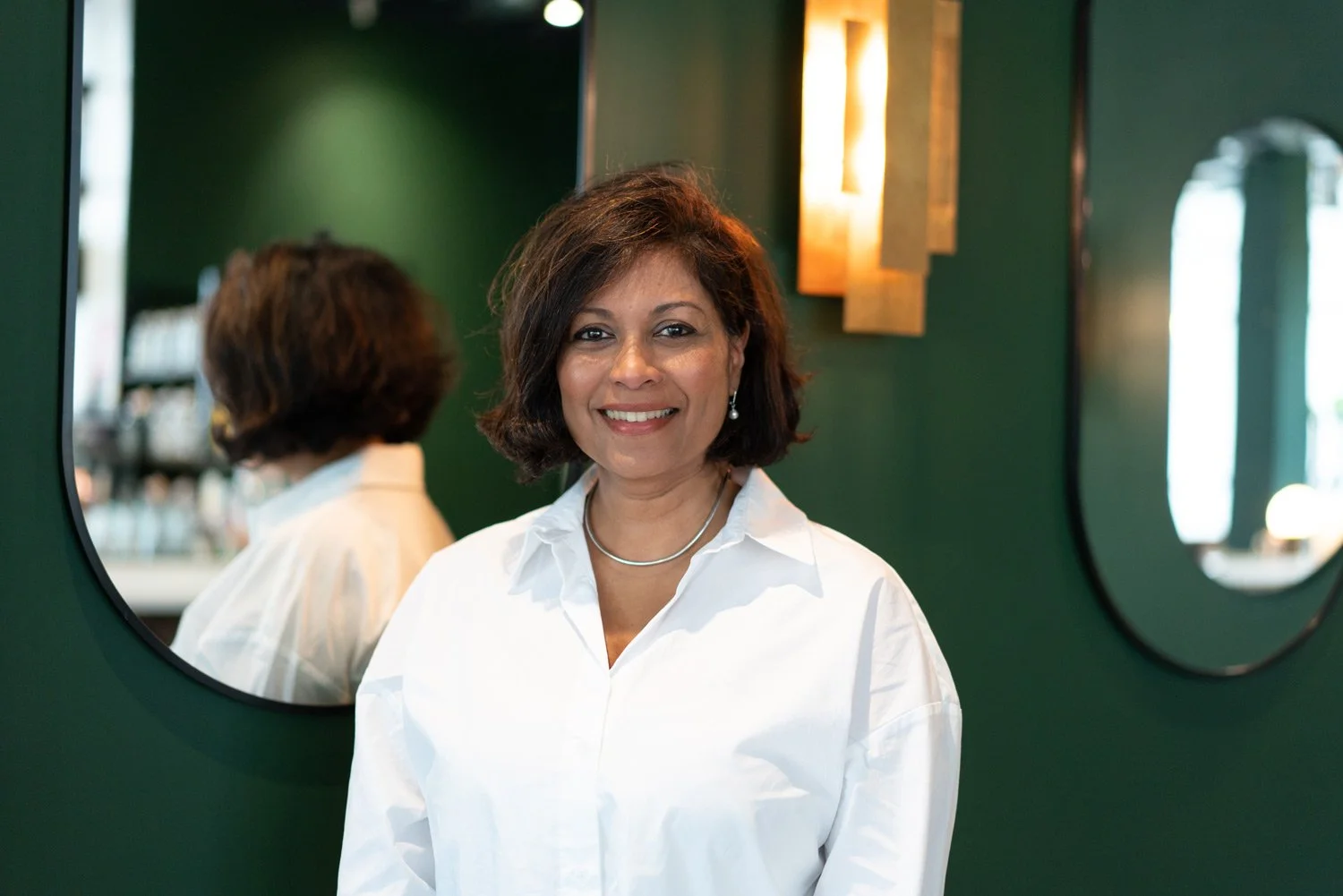
Roshni Mooneeram portrait

What I do?

As an Inclusion Architect I operate at three interconnected levels:

  • Macro: continental and global strategies and policies that re-balance power and centre equitable partnerships, particularly between the Global North and South.​

  • Meso: organisation-wide blueprints that embed inclusion into governance, research ecosystems and representational science, shifting institutions from programmatic EDI to systemic, future-focused change.​

  • Micro: coaching and learning journeys that equip leaders and teams to use inclusion as a lever for performance, innovation, and resilience.

My Approach

A number of factors make my approach unique. I take a strategic steer, as opposed to a programmatic one to inclusion (see The Architect’s Journal). I draw from global insights, inhouse leadership roles, lived and professional experience to help organisations develop bespoke strategies on representation and inclusion that are directly aligned with and support their organisational mission. I focus on the systemic dimensions of representation and inclusion, and take an evidence-based approach to identify gaps and devise targeted actions accordingly. My approach combines strategic insight with practical tools, enabling organisations to embed inclusive excellence as a driver of innovation, growth, and social impact."

My Building Blocks of Inclusion

  • Inclusion Architecture at the system level means designing the policies, strategies, and governance frameworks that make inclusion a structural feature of how regions, nations and organisations function. Through this lens, my work focuses on building architectures that are coherent across regional, national and organisational levels, so that inclusion is embedded into missions, mandates, and core business objectives rather than treated as a parallel agenda.

    By collaborating closely with leadership teams, I develop tailored inclusion architectures that align with each entity’s purpose, operating model, and context, ensuring that strategy, policy, and culture reinforce one another over time. This includes translating vision into actionable frameworks, measurable goals, and implementation pathways that can be owned and sustained internally.

    Examples of Inclusion Architecture in policy and strategy include: designing pathways for mutual learning and collaboration in inclusion policies across Europe and China in my role as Visiting Expert at the Sino-European Key Lab; leading the development of a five-year strategy for girls’ and women’s education commissioned by the African Union (2021–2025), “Building Resilience to Foster African Human Capital through Girls’ and Women’s Education for Sustainable Development”; developing a roadmap and action plan to drive Government policy change in the UK for the Institute for Policy and Engagement at the University of Nottingham, funded by Research England, “Creating pathways between research and policy” (2020).


    Further Inclusion Architecture work includes a national “Strategy to Promote Female Participation in the Economy” commissioned by the National Productivity and Competitiveness Council in Mauritius (2017), and the development of the Equality, Diversity and Inclusion Strategy for the European Molecular Biology Laboratory (2021–2025), each crafted to structurally connect inclusion with competitiveness, excellence, and long-term societal and economic value.

  • My advisory work within Inclusion Architecture focuses on designing the behavioural and structural building blocks that make inclusion measurable, repeatable, and outcomes driven. This means supporting organisations to move from intent to implementation, whether they are navigating cultural shifts or redesigning core processes such as inclusive recruitment, governance, and leadership development.

    Through strategic insight and actionable plans, advisory support helps align inclusion with organisational performance, scientific excellence, and purpose-driven impact. The emphasis is on architectures that are coherent across culture, systems, and behaviours so that inclusion becomes part of how decisions are made.

    Key areas of advisory intervention include:

    • Organisational Inclusion strategies anchored in mission and core business.

    • Governance structures for Inclusion that ensure transparency, accountability, and genuine buy-in.

    • Embedding inclusion principles into Learning and Development and leadership programmes so leaders become intentional architects of culture.

    • Inclusive recruitment practices that widen access to talent and reduce systemic bias.

    • Inclusive communication that reflects and reinforces organisational values and belonging.

    Advisory clients include leading European and international institutions such as the European Commission (Brussels), the European Organisation for Nuclear Research (CERN, Geneva), the European Molecular Biology Laboratory (Heidelberg), and the Friedrich Miescher Institute for Biomedical Research, Novartis (Basel), reflecting a track record of Inclusion Architecture at the forefront of science, policy, and innovation.

  • Inclusive Leadership Programmes are a core expression of Inclusion Architecture: they create a change ecosystem where inclusion becomes the default setting of leadership. When leaders consistently practice inclusive behaviours and redesign the processes they control, they act as catalysts for a culture reset that sustains performance, innovation, and belonging over time.​

    These programmes are bespoke, designed to drive both behavioural shifts and structural change, so that what leaders learn is immediately translated into team norms, decision-making, and systems. They address the reality that the skills needed to lead global, diverse workforces are rarely covered in standard leadership curricula.​

    Leaders are supported to:

    • Build diverse teams by design.​

    • Advance inclusion through intentional, practical, and sustained action.​

    • Leverage cognitive diversity and collective intelligence for optimised decisions and innovation.​

    • Mitigate bias in behaviours and processes, one of the biggest hurdles to inclusion.​

    • Generate psychological safety as a foundation for creativity, learning, and high performance.​

    A distinctive focus of my Inclusion Architecture work is leadership capacity building in the Global South, using epistemological frameworks from Africa, South America, and Asia to design programmes with powerful, context-rooted outcomes. 

    Clients for whom Inclusive Leadership Programmes have been designed and delivered include Cochrane, the Friedrich Miescher Institute for Biomedical Research, the Institute of Molecular Biotechnology, and the Evidence Synthesis Infrastructure Collaborative funded by the Wellcome Trust, reflecting impact across science, health, and knowledge ecosystems.

  • Learning and Development is a key pillar of Inclusion Architecture. When leadership programmes are reinforced by learning opportunities at every hierarchy, organisations build a holistic change ecosystem where inclusion is driven both top down and bottom up.​

    My work focuses on designing L&D architectures that equip people with the mindsets, skills, and everyday practices needed to make inclusion real in their teams, processes, and decisions. Programmes are always tailored to organisational context and grounded in real scenarios, so learning translates directly into behaviour and system change.​

    Services include:

    • Capacity-building programmes for Diversity and Inclusion teams to strengthen strategic influence and operational effectiveness.​

    • Coaching for Diversity and Inclusion leaders to navigate complexity, build alliances, and architect sustainable change.​

    • Bias mitigation workshops where participants design strategies to address bias in behaviours and work processes.​

    • Microaggression and bystander workshops using concrete tools so participants can hold themselves, peers, and leaders to account.​

    • Creating collaborative cultures through effective feedback, helping teams mitigate conflict and build trust through inclusive feedback practices.​

    • Train-the-trainer programmes across inclusion-related topics to enable large organisations to deliver at scale and embed internal capability.​

    • Webinars for large groups on dimensions of inclusion such as neuroinclusion, intergenerational diversity, confronting racism and inspiring change, building resilient organisations, and gender diversity.​

    • Bespoke programmes designed as part of a wider Inclusion Architecture, aligning learning experiences with organisational strategy, values, and transformation goals.

  • Coaching is a central pillar of Inclusion Architecture, developing leaders who can navigate complexity, design inclusive systems, and sustain impact over time. With over a decade of coaching practice in research institutes, Fortune 500 companies and international organisations, my work supports leaders to build inclusive culture and transformational capacity through systemic coaching approaches.​

    At the heart of my coaching practice is a commitment to diverse coaching epistemologies that reflect the richness of human experience, ensuring that the approach is inclusive, adaptable, and attuned to each client’s context and background.​ Drawing from a range of philosophies and methodologies, coaching becomes both a space for personal renewal and a laboratory for designing new, more inclusive ways of leading.

    Grounded in the European Mentoring and Coaching Council’s (EMCC’s) competency framework, my practice integrates reflective work, supervision, and continuous professional development to maintain depth, ethical rigour, and high standards.

  • Speaking is a live expression of Inclusion Architecture, bringing the ideas, tools, and possibilities of systemic inclusion to rooms where decisions are made and futures are shaped. Invitations span leadership retreats and high-impact platforms across research institutes, European Union institutions, flagship science organisations, and Fortune 500 companies, reflecting a track record of engaging diverse, global audiences.​

    My keynotes and talks are designed to inspire leaders to critically rethink “business as usual” and to recognise inclusion as a powerful lever for innovation, performance, and impact. Drawing on my research background, global insights, and in-house experience of what genuinely works in organisations, each session aims to ignite dialogue, spark action, and strengthen individuals’ sense of agency in navigating change.​

    I have spoken to live audiences of 1500 people at Westminster, London. As Visiting Expert at the Sino-European KeyLab, my first public lecture in China in March 2025 attracted more than 40,000 participants.

Contact me for your first complimentary consultation

My inclusive Leadership Programme: creating a change ecosystem

I have found that making inclusive leadership the norm is the catalyst for change in organisations. As leaders become proficient in inclusive behaviours and practices, and become agents of change, they trigger a culture reset.

People walking through a modern city street with the Tower Bridge in London in the background.

The human skills that leaders need for a global and diverse workforce in a rapidly shifting world are not always covered by standard Leadership programmes. For example,  leaders need to:

  • identify and address the unconscious bias that distorts their decision making about both people and business issues

  • mitigate group think and create psychological safety to enhance performance and innovation

  • build their capacity to lead diverse teams and leverage diversity dividends to deliver impact and innovation

The success of transformation journeys relies on the concept of shared leadership in organisations. Inclusive Leadership programmes work optimally when supported by the facilitation of further Learning and Development programmes across all hierarchies to create a holistic change ecosystem incorporating both top down and bottom-up approaches. For example, through bystander tools and strategies, participants devise ways to hold one another, and their leaders, to account. 

Contact me for your first complimentary consultation

My clients

What my clients say:

  • "Roshni Mooneeram's consultancy has been instrumental in transforming our approach to Equality, Diversity, and Inclusion (EDI) at the Friedrich Miescher Institute for Biomedical Research (FMI). Her expertise in EDI governance, strategic advisory, and fostering an inclusive research ecosystem has been proven highly valuable. She has supported our team leaders with inclusive leadership practices to enhance our organisational culture and fostered a change in our ecosystem by involving everyone at the institute through the concept of shared leadership. Perhaps most impressively, while the topic of EDI can be challenging, Roshni’s balanced and pragmatic approach has brought key stakeholders together. There are clear indications that her consultancy has facilitated positive change at FMI, and I recommend her services to any organisation looking to take a strategic approach to EDI and foster an inclusive research environment.”

    Prof Dirk Schübeler
    Director of the Friedrich Miescher Institute for Biomedical Research, Novartis Campus, Basel

  • “Over the past two years, we have worked with Roshni on a variety of D&I projects, including strategy sessions, train-the-trainer workshops, and numerous webinars on topics such as microaggressions, neurodiversity, and intergenerational intelligence. Roshni’s clear, candid, and engaging style effectively draws the audience in, resulting in high ratings and requests for additional sessions. She always prepares thoroughly, and makes sure her work is tailored to the audience, expertly succeeding in keeping participants engaged throughout the session and the Q&A. She is an excellent speaker who brings a unique combination of knowledge, passion for the topic, kindness and gravitas. The feedback from her webinars and workshops has consistently been outstanding, and many participants said they were moved and inspired to become inclusion champions.”

    Liliana Pao
    Policy Officer for Diversity and Inclusion, Diversity and Inclusion Office DG HR, European Commission

  • "At EEX Group, we believe that diversity and inclusion are an important part of our success. We also believe that we find strength in combining different diversity dimensions to fulfil our purpose. This is an ongoing journey, that every individual colleague should contribute to, day by day. Roshni was a keynote speaker in our 2024 annual leadership meeting, and she provided a highly inspiring and elaborate insight into how to further shape such a journey as a global company in the years to come."

    Markus Vorbeck
    EEX Group HR Director

  • “Roshni Mooneram is the kind of Strategic Consultant every organisation committed to Equity needs: her holistic practice leads to tangible positive results, swiftly promoting profound cultural shifts in complex, multinational scenarios. Throughout the years, I have observed her practice while setting up the University of Nottingham’s first international campus (in Ningbo, China). At the University of Nottingham’s UK Campus, she was commissioned by the Institute for Policy and Engagement to create a Roadmap for the University. She acted as Principal Investigator into policy-oriented research projects across Faculties and defined the processes that would enable the University of Nottingham to leverage its EDI informed research to influence policy: institutionally, regionally at the level of local authorities and businesses, and nationally at the level of Government. This report as well as her five-year strategy for the African continent, commissioned by the African Union: Building Resilience to Foster African Human Capital through Girls’ and Women’s Education for Sustainable development consolidated her profile as one of the most sought-after Global EDI strategists. In summary, I could not recommend Roshni more!”

    Maria Augusta Arruda
    Director of the Brazilian Biosciences National Laboratory at the National Centre for Research in Energy and Materials (LNBio-CNPEM)

  • "I am very grateful to Dr Roshni Mooneeram for the time, mentorship, and thoughtful guidance provided through the Inclusive Leadership workshop series and coaching sessions as part of ESIC early-career mentoring. Her approach to the Programme and one-to-one coaching has been extremely valuable in supporting my professional growth and reflective practice. What stands out most is her inclusive and reflective facilitation style. Roshni consistently created a supportive and engaging space where diverse perspectives were welcomed and respected, making discussions meaningful and impactful. Through her coaching, she encouraged critical self-reflection and supported people like me in navigating academic and professional challenges with greater clarity and confidence. In short, her mentoring has been an enriching experience and has deepened my understanding of inclusivity as a core principle in teaching, coaching, and professional practice."

    Aisha Naz Ansari
    Working Group Member at ESIC, Wellcome Trust, Member of Early and Mid Career Professionals at ESIC

  • "I attended the ESIC Inclusive Leadership mentorship programme organised for Early and Mid-Career professionals with Roshni over a cumulative period of about 6 weeks. Personally, I have become more aware of my leadership competencies and incompetencies. A colleague had this to say after working on an initiative together: “Euphrasia, why is it that every time I hear you speak, you make me feel like I can create change for the good. You are one of the most amazing and motivating women I have ever met!". Roshni’s programme was transformative and I enjoyed how she walked the talk!"

    Dr. Ndi Euphrasia
    Team Lead, Cameroon Consumer Service Organisation

  • "Dr. Roshni Mooneeram’s recent contributions as a Visiting Expert at our Sino-European Key Laboratory were both intellectually stimulating and impactful to our institutional efforts in fostering a more inclusive academic environment. Her keynote, “Why Accelerating Action for Gender Equality is Crucial for Research and Science,” was delivered in the context of International Women’s Day, and provoked meaningful reflection and dialogue among our quite diverse staff and students. Additionally, Roshni delivered an engaging and enlightening public lecture on China–Africa relations at the Ningbo Tianyi Library, which was attended by more than 40,000 participants in person and online. Both talks highlighted her ability to connect with diverse audiences with clarity and insight, despite the complexity of the issues, and the feedback was universally positive."

    Professor Derek Irwin
    Dean of Humanities and Social Sciences, University of Nottingham Ningbo China

  • "Dr Roshni Mooneeram has supported FE Associates and our clients in the field of inclusive leadership. Her approach is rooted in curiosity, confidence building and thoughtful insight. Inclusive leadership is a key area of focus for the UK further education sector and as an expert in this field Dr Mooneeram has much to offer."

    Matt Atkinson
    Director, Further Education Associates

  • "As EMBL’s first Head of Equality, Diversity and Inclusion, Roshni played a pioneering role in building the EDI function from the ground up, establishing governance structures, developing EMBL’s first EDI strategy, and creating alignment among diverse stakeholder groups. She brought a distinctive blend of strategic vision and an understanding of science contexts to embed inclusion within EMBL’s research and organisational culture. Since moving into consultancy, Roshni has further deepened her expertise in advancing EDI in scientific research, partnering with leading organisations across Europe and beyond to drive sustainable, systemic change. Her work spans the development of inclusive leadership frameworks, data-driven equity analyses, and the translation of EDI principles into everyday research practice. Drawing on her interdisciplinary background, she helps organisations move beyond compliance to cultivate environments where diversity is recognised as a driver of creativity and impact. Through her thought leadership and collaborative approach, Roshni continues to influence the broader EDI landscape, advising on policy, contributing to international initiatives, and mentoring emerging EDI practitioners committed to building equitable futures in science."

    Matti Tiirakari
    international consultant to science institutes, previously COO at EMBL

  • "Organisational Change Consultant After improving and stabilizing services, we found ourselves at a crossroads: where to take our services next. Roshni came in and designed and executed a service excellence program for us that transformed the team, engaged the client and motivated the people. She leveraged people-centric change management expertise, stakeholder management principles and coaching techniques to drive this transformation. We’ve grown form great to excellent and benefited from her innovative approach for years to come!"

    Christian Van Bochove
    Director, Head of Customer Success, Epicenter